
The Complete List of Water Soluble Vitamins and What They Do
There are nine water-soluble vitamins: vitamin C and the eight B vitamins. Unlike fat-soluble vitamins, most of these are not stored in large amounts in the body. Excess is typically filtered out through urine, which means your body depends on consistent dietary intake to keep levels where they need to be. This guide covers the full list water soluble vitamins, what each one does, where to find them, and what happens when intake falls short.
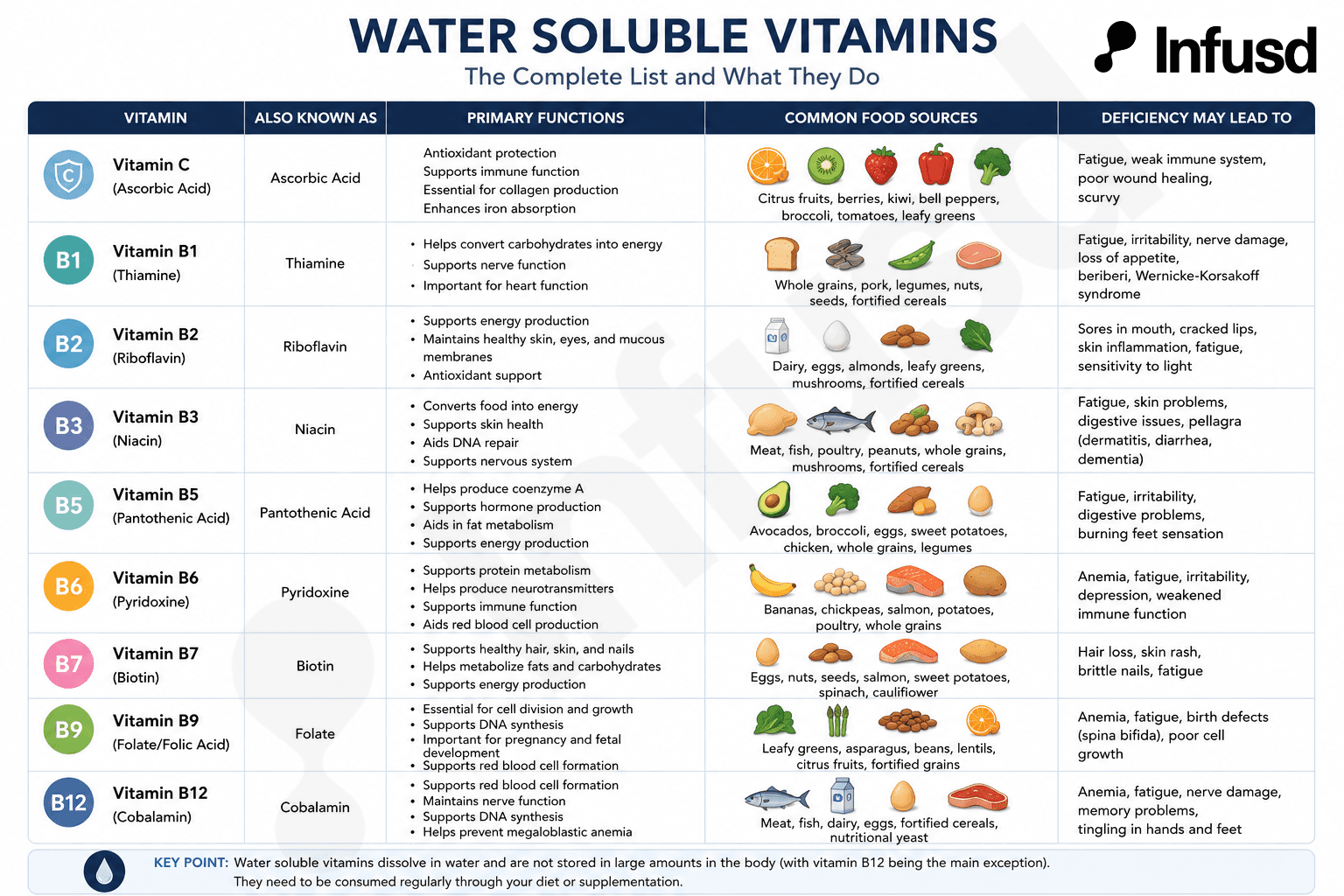
What Are Water-Soluble Vitamins?
Water-soluble vitamins dissolve in water. Once consumed, they circulate through body fluids and are absorbed directly into the bloodstream. Because they don't require fat or bile for absorption, they move into circulation relatively quickly.
The key distinction from fat-soluble vitamins is storage. Most water-soluble vitamins are not retained in significant amounts. When the body takes in more than it needs, the excess is excreted through urine. That's why regular intake matters more than it does for fat-soluble vitamins like A, D, E, and K, which the body can stockpile in fatty tissue and the liver.
Vitamin B12 is the main exception. Although it's water-soluble, the liver can store meaningful amounts, sometimes enough to last several years before a deficiency develops.
Why Water-Soluble Vitamins Matter
These nine vitamins are involved in some of the most fundamental processes in the body. The B vitamins act as coenzymes, meaning they help enzymes do their jobs. Without them, metabolic reactions slow down or break down entirely.
Collectively, water-soluble vitamins support:
Energy metabolism — B1, B2, B3, B5, and B6 all play roles in converting carbohydrates, fats, and proteins into usable energy
Nervous system function — B1, B6, and B12 support nerve signaling and myelin sheath maintenance
Immune function — Vitamin C and B6 support white blood cell production and immune response
Red blood cell formation — B9 and B12 are both required for healthy red blood cell production
Collagen production — Vitamin C is a direct cofactor in collagen synthesis
DNA synthesis and cell division — B9 and B12 are essential for replication and repair
Antioxidant defense — Vitamin C neutralizes free radicals; B2 supports antioxidant enzyme function
Each vitamin has its own specific role, but they often work together. Deficiency in one can affect how others function.
Vitamin C: Function, Benefits, and Food Sources
Vitamin C is the only water-soluble vitamin that isn't part of the B-complex group. It's one of the most well-known nutrients, but its functions go well beyond immune support.
What it does: Vitamin C is a required cofactor for enzymes that build and stabilize collagen, the structural protein that holds connective tissue together. It also acts as an antioxidant, supports white blood cell function, and improves the absorption of non-heme iron from plant foods.
Deficiency: Prolonged deficiency leads to scurvy, which causes fatigue, gum inflammation, joint pain, poor wound healing, and skin changes. Symptoms can appear within a month of consuming less than around 10 mg per day. Severe untreated scurvy can be fatal, though it's rare in most developed countries.
Food sources: Citrus fruits, kiwi, strawberries, sweet peppers, broccoli, tomatoes, potatoes, and leafy greens.
Supplementation: Vitamin C supplements are widely used and generally safe. But at doses above 2 g per day, some people experience nausea, stomach cramps, or diarrhea. Most people don't need high-dose supplements if they eat a varied diet with plenty of fruit and vegetables.
B-Complex Vitamins Explained
The eight B vitamins are grouped together because they tend to appear in similar foods and work through interconnected metabolic pathways. They support energy production, brain function, nerve health, red blood cell formation, and more. Here's what each one does.
Vitamin B1: Thiamine
Primary role: Converts carbohydrates into energy and supports nerve and muscle function. Thiamine pyrophosphate (TPP) is a key coenzyme in several metabolic reactions.
Deficiency: Severe deficiency causes beriberi, which affects the cardiovascular and nervous systems. Wernicke-Korsakoff syndrome is a serious neurological condition linked to thiamine deficiency, often associated with heavy alcohol use. Early symptoms include fatigue, irritability, and tingling in the hands and feet.
Food sources: Whole grains, legumes, pork, seeds, nuts, fortified cereals. Milled and processed grains contain very little thiamine.
At risk: People with alcohol dependence, malabsorption conditions, diabetes, or those who have had bariatric surgery.
Vitamin B2: Riboflavin
Primary role: Supports energy metabolism by helping break down carbohydrates, fats, and proteins. Also supports antioxidant enzyme function and maintains healthy skin, eyes, and mucous membranes.
Deficiency: Known as ariboflavinosis. Signs include cracked corners of the mouth, sore throat, skin changes, and red or itchy eyes. Riboflavin deficiency is uncommon in most developed countries.
Food sources: Dairy products, eggs, lean meats, organ meats, almonds, mushrooms, spinach, fortified grains.
At risk: Vegan athletes, pregnant and breastfeeding women, and people with high alcohol intake.
Vitamin B3: Niacin
Primary role: Energy production, DNA repair, and cellular signaling. Also supports healthy skin and nervous system function.
Deficiency: Severe deficiency causes pellagra, characterized by dermatitis, diarrhea, and dementia. It can be fatal if untreated. At-risk groups include people with alcohol use disorder, inflammatory bowel disease, or anorexia.
Food sources: Poultry, fish, beef, peanuts, legumes, brown rice, fortified grains.
Supplementation note: Doses of 50 mg or more can cause niacin flushing, a redness and burning sensation on the skin. High doses of 1,000 mg or more may cause liver damage and other serious effects.
Vitamin B5: Pantothenic Acid
Primary role: Required for the production of Coenzyme A, which is central to energy metabolism and fatty acid synthesis. Also supports the production of certain hormones and neurotransmitters.
Deficiency: Extremely rare because pantothenic acid is present in almost all foods. When it does occur, symptoms may include fatigue, numbness, irritability, and digestive issues.
Food sources: Beef liver, chicken, eggs, shiitake mushrooms, sunflower seeds, avocado, legumes, whole grains.
Vitamin B6
Primary role: Amino acid metabolism, neurotransmitter synthesis, immune function, and hemoglobin production. Also important for fetal brain development.
Deficiency: Uncommon but can cause anemia, mood changes, skin irritation, and peripheral neuropathy. In infants, deficiency can cause seizures.
Food sources: Poultry, fish, potatoes, chickpeas, bananas, fortified cereals, beef liver, whole grains.
At risk: People with kidney disease, autoimmune conditions, or alcohol dependence.
Supplementation note: The Food and Nutrition Board has set an upper limit of 100 mg per day for adults. Chronic high-dose supplementation above 300 to 500 mg per day has been linked to sensory nerve damage.
Vitamin B7: Biotin
Primary role: Acts as a cofactor for carboxylase enzymes involved in fatty acid synthesis, carbohydrate metabolism, and amino acid metabolism. Also supports skin, hair, and eye health, though its reputation in this area is often overstated in marketing.
Deficiency: Rare. It's clearly documented in people who consume large amounts of raw egg whites over time. Raw egg whites contain avidin, a protein that binds tightly to biotin and blocks absorption. Cooking the egg white denatures avidin and removes this effect.
Food sources: Cooked eggs, nuts, seeds, salmon, sweet potatoes, organ meats, most fresh vegetables.
Vitamin B9: Folate and Folic Acid
Primary role: DNA synthesis, cell division, red blood cell formation, and amino acid metabolism. Especially important during periods of rapid cell growth, including pregnancy.
Folate vs. folic acid: Folate is the natural form found in food. Folic acid is the synthetic form used in fortified foods and supplements. Folic acid is more stable and is the form shown to prevent neural tube defects.
Deficiency: Causes megaloblastic anemia. In pregnancy, inadequate intake significantly raises the risk of neural tube defects in the developing fetus. The CDC recommends that all women capable of becoming pregnant consume 400 mcg of folic acid daily, since neural tube closure happens in the first weeks of pregnancy, often before a woman knows she's pregnant.
Food sources: Leafy greens, lentils, beans, asparagus, broccoli, citrus fruits, avocados, fortified grains and cereals.
Vitamin B12
Primary role: Nerve function and myelin sheath maintenance, red blood cell production, DNA synthesis, and methylation processes.
Unique storage behavior: B12 is water-soluble but can be stored in the liver in substantial amounts. Total body stores can reach up to 10 mg, and it can take three to five years or longer for deficiency to develop after stopping intake.
Deficiency: Causes megaloblastic anemia, fatigue, numbness or tingling in the extremities, cognitive changes, and potentially irreversible nerve damage if left untreated.
Food sources: Meat, fish, shellfish, dairy, eggs, fortified cereals, fortified plant-based milks, nutritional yeast.
At risk: Vegans and strict vegetarians, older adults (absorption efficiency declines with age), people with pernicious anemia, Crohn's disease, or those taking metformin or proton pump inhibitors long-term.
Why Water-Soluble Vitamins Need Regular Intake
Because most water-soluble vitamins aren't stored in significant amounts, the body relies on a steady supply from food or supplements. When intake drops, body levels can fall relatively quickly, especially for vitamins with high metabolic turnover.
Deficiency risk increases with:
Restrictive diets (veganism raises B12 risk; limited variety raises risk across the board)
Malabsorption conditions such as Crohn's disease or celiac disease
Increased metabolic needs during pregnancy or lactation
Older age, which affects absorption efficiency for several vitamins
Alcohol use disorder, which interferes with absorption and metabolism of multiple B vitamins
Certain medications that deplete or block vitamin absorption
Eating a varied diet that includes fruits, vegetables, whole grains, legumes, and protein sources covers most needs for most people. But specific life stages or health conditions may require supplementation.
What Happens If You Take Too Much?
Water-soluble vitamins carry a lower toxicity risk than fat-soluble ones because excess is usually excreted rather than accumulated. But that doesn't mean high-dose supplements are risk-free.
Key considerations:
Vitamin B6: Chronic supplementation above 300 to 500 mg per day can cause sensory neuropathy. The established upper limit is 100 mg per day for adults.
Niacin (B3): Flushing can occur at doses as low as 50 mg. At 1,000 mg or more, risks include liver damage, gout, and ulcers.
Vitamin C: Generally well tolerated, but doses above 2 g per day can cause nausea, cramps, and diarrhea in some people.
Folate: Intakes above 5,000 mcg per day may mask pernicious anemia by correcting the blood picture without addressing the underlying B12 deficiency.
For thiamine, riboflavin, B12, pantothenic acid, and biotin, no upper limits have been established and no problems with overconsumption from food or typical supplement doses are known.
The practical takeaway: consider your total intake across food, fortified products, and supplements before reaching for high-dose formulations.
Water-Soluble vs Fat-Soluble Vitamins
The core difference is how they dissolve and how the body handles excess.
Feature | Water-Soluble | Fat-Soluble |
|---|---|---|
Vitamins | C, B1, B2, B3, B5, B6, B7, B9, B12 | A, D, E, K |
Dissolves in | Water | Fat |
Absorption | Directly into bloodstream | Requires dietary fat and bile; enters via lymphatic system |
Storage | Minimal (B12 is the exception) | Stored in liver and adipose tissue |
Excretion | Excess excreted in urine | Excess stored; excreted primarily in feces |
Toxicity risk | Generally lower | Higher risk of accumulation |
Fat-soluble vitamins (A, D, E, and K) can build up in the body over time, which raises the risk of toxicity with excessive supplementation. They also require fat for absorption, which matters for people with fat malabsorption conditions.
How Water-Soluble Vitamins Are Used in Supplements and Beverages
Water-soluble vitamins are a natural fit for RTD beverages, hydration mixes, powdered supplements, gummies, fortified foods, and wellness shots. They disperse in water-based systems without requiring emulsifiers or fat carriers, which makes them easier to work with than fat-soluble vitamins in many formats.
But easier to disperse doesn't mean formulation is straightforward. Water-soluble vitamins are sensitive to several processing and storage conditions:
Heat: Processing temperatures affect retention. Lower time-temperature combinations generally preserve more vitamin activity.
Light: Riboflavin is highly light-sensitive. Folic acid degrades under UV and sunlight exposure. Packaging choices matter.
pH: Stability varies significantly by vitamin. Pantothenic acid is most stable between pH 6 and 7. Vitamin B6 is stable in acidic conditions but not alkaline ones. Vitamin C oxidizes readily in solution, especially in the presence of metal ions.
Ingredient interactions: Certain vitamins, particularly C, B1, B2, B12, and folic acid, can interact with each other in ways that accelerate breakdown.
For product developers, this means managing more than just solubility. Potency at end of shelf life, sensory profile, processing compatibility, and clean-label requirements all need to be considered together.
At Infusd, we work with brands developing functional beverages, fortified foods, and supplement formats to solve ingredient delivery and stability challenges. Our technology transforms fat-soluble and hard-to-formulate nutrients into stable, water-soluble forms that hold up through pasteurization, carbonation, and extended shelf life, without synthetic emulsifiers or harsh processing. If you're developing products that need clean, stable, efficacious nutrient delivery, our applications page covers the formats we support.
Frequently Asked Questions
What are the 9 water-soluble vitamins?
Vitamin C and the eight B vitamins: B1 (thiamine), B2 (riboflavin), B3 (niacin), B5 (pantothenic acid), B6 (pyridoxine), B7 (biotin), B9 (folate/folic acid), and B12 (cobalamin).
Is vitamin C water soluble?
Yes. Vitamin C dissolves in water and is not stored in large amounts. It plays key roles in collagen synthesis, antioxidant protection, immune function, and iron absorption from plant foods.
Is vitamin B12 water soluble?
Yes, B12 is water soluble. But it's unusual because the body can store significant amounts in the liver, unlike most other water-soluble vitamins.
Which water-soluble vitamin can be stored?
Vitamin B12. The liver can store enough B12 to last several years, which is why deficiency can take a long time to develop even after dietary intake drops.
Why do water-soluble vitamins need to be consumed regularly?
Because most aren't stored in significant amounts, excess is excreted in urine. Without regular intake from food or supplements, levels can fall and metabolic processes that depend on these vitamins are affected.
Can you take too much vitamin C?
For most people, vitamin C has a low toxicity risk. But doses above 2 g per day can cause digestive symptoms including nausea, cramps, and diarrhea. Most people don't need high-dose supplementation if their diet includes plenty of fruit and vegetables.
What foods contain water-soluble vitamins?
A wide range: citrus fruits, berries, leafy greens, legumes, whole grains, nuts, seeds, eggs, dairy, meat, fish, poultry, and fortified foods. Eating a varied diet covers most needs for most people.
Are water-soluble vitamins easier to absorb?
Water solubility supports dispersion in water-based environments and allows direct absorption into the bloodstream without requiring fat or bile. But actual absorption still depends on the specific vitamin, dose, digestive health, the food matrix, and how the product is formulated.
What is the difference between water-soluble and fat-soluble vitamins?
Water-soluble vitamins dissolve in water, circulate through body fluids, and excess is usually excreted in urine. Fat-soluble vitamins (A, D, E, K) dissolve in fat, require dietary fat for absorption, and are stored in the liver and fatty tissues. Fat-soluble vitamins carry a higher risk of toxicity from excessive supplementation because they accumulate.
Better Vitamin Knowledge Supports Better Product and Nutrition Decisions
The full list water soluble vitamins covers nine nutrients that collectively support energy metabolism, nervous system function, immune response, red blood cell formation, collagen production, DNA synthesis, and cellular health. None of them work in isolation, and most depend on consistent dietary intake to stay at functional levels.
For consumers, dietary variety is the most reliable foundation. For product developers, understanding how each vitamin behaves, where it's stable, how it interacts with other ingredients, and how it holds up through processing, is what separates a well-formulated product from one that looks good on paper but underdelivers in the finished format.
If you're building functional beverages, fortified foods, or supplement products and need ingredient delivery that's stable, clean-label, and efficacious, explore what we do at Infusd. We help brands turn formulation challenges into finished products that actually work.