What Does Solubility Mean in Science for Supplements
An ingredient can look great on paper and still fail in the real world. If it can't dissolve, disperse, or remain stable in a product, it won't perform as intended. That's the core problem solubility solves in dietary supplement formulation.
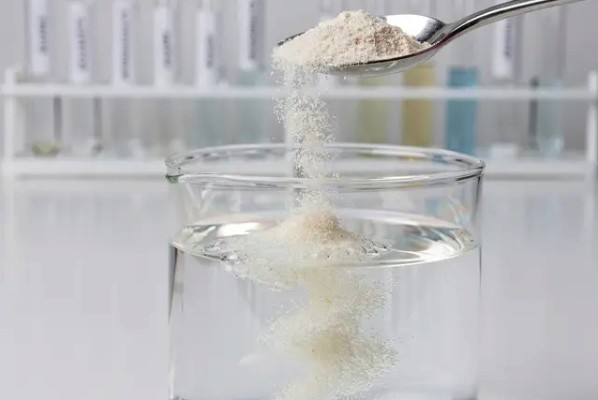
Solubility is the ability of a substance to dissolve in a solvent and form a uniform mixture. In supplement science, it determines whether an active ingredient mixes into a beverage, stays evenly distributed in a gummy, disperses in a powder, or reaches the digestive system in a form the body can actually use.
This matters across every format: RTD drinks, stick packs, capsules, gummies, shots, fortified foods, and functional ingredients. It also connects directly to bioavailability, stability, taste, and shelf life. Understanding what solubility means in science is, in many ways, understanding what makes a supplement formulation work.
What Does Solubility Mean in Science?
Solubility describes how much of a substance can dissolve in a given medium under specific conditions. Those conditions include temperature, pressure, molecular structure, particle size, and the chemical nature of both the ingredient and the medium it's being dissolved into.
In supplement formulation, solubility is rarely a binary yes or no. It's a spectrum. Some ingredients dissolve readily. Others dissolve partially. Some barely dissolve at all without significant formulation work.
Solute, Solvent, and Solution in Supplement Formulation
The solute is the ingredient being dissolved. The solvent is the medium it dissolves into. The solution is the resulting uniform mixture.
Vitamin C dissolving in water is a straightforward example. The vitamin is the solute, water is the solvent, and the resulting liquid is the solution. Omega-3 oil added to a water-based beverage is the opposite scenario: the oil resists dispersion because it and water are chemically incompatible. Botanical extracts sit somewhere in between, behaving differently depending on their specific chemical profile and the carrier system used.
Why "Like Dissolves Like" Matters for Ingredients
The principle "like dissolves like" is one of the most practically useful concepts in formulation chemistry. Polar solvents dissolve polar solutes; nonpolar solvents dissolve nonpolar solutes. Water is polar. Most oils are nonpolar. They don't mix without help.
This is why some actives dissolve easily into water-based products and others require advanced delivery systems. Vitamins A, D, E, and K are nonpolar and fat-compatible. They resist dispersion in aqueous beverages, powders, and gummies unless the formulation specifically addresses that incompatibility. Vitamin C and most B vitamins are polar and water-compatible, making them far easier to work with in most supplement formats.
Why Solubility Matters for Nutrient Absorption
Before a nutrient can be absorbed, it has to be available in a form the digestive system can process. That means it needs to dissolve or disperse adequately in the digestive environment. Poor solubility can interrupt that process before absorption even begins.
Some of the main factors affecting bioavailability from a pharmacological perspective are solubility, extensive pre-systemic metabolism, poor membrane permeability, and active efflux transportation. Solubility is often the first barrier.
From Product to Digestive Tract
After you consume a supplement, the active ingredient needs to be released from its format, whether that's a capsule shell, a gummy matrix, a beverage, or a powder. It then encounters digestive fluids, enzymes, bile, and significant pH changes across different sections of the gastrointestinal tract.
Ingredients that remain clumped, crystallised, separated, or poorly dispersed at this stage are less available for absorption. The digestive system can only work with what it can access. If an ingredient hasn't dissolved or dispersed adequately, it may pass through without being absorbed efficiently.
Why Poorly Soluble Ingredients May Absorb Poorly
Several widely used supplement ingredients are known for poor solubility. Curcumin has extremely poor water solubility and bioavailability. The main limiting factor of low bioavailability of CoQ10 is its poor solubility in gastrointestinal fluids. Omega-3 fatty acids face similar challenges in water-based formats. Fat-soluble vitamins require specific digestive conditions to be absorbed at all.
The ingredient being on the label doesn't mean the body is absorbing it effectively. Solubility is a significant part of why.
Water-Soluble vs Fat-Soluble Nutrients
The distinction between water-soluble and fat-soluble nutrients is one of the most important in supplement formulation. It shapes how ingredients behave in products, how they're absorbed in the body, and what formulation strategies are needed.
Water-Soluble Vitamins and Ingredients
Water-soluble vitamins include vitamin C and the full B-complex range. Water-soluble vitamins are absorbed directly into the bloodstream, whereas fat-soluble vitamins require bile acids and fat absorption for optimal uptake.
This makes water-soluble nutrients easier to incorporate into beverages, powders, and liquid formats. But easier doesn't mean problem-free. Taste, pH sensitivity, heat stability, and interactions with other ingredients can still create formulation challenges, particularly in RTD beverages and gummies.
Fat-Soluble Vitamins and Ingredients
Vitamins A, D, E, and K are fat-soluble. So are omega-3 fatty acids, CoQ10, carotenoids like lutein and astaxanthin, and many botanical compounds including curcumin. After absorption into enterocytes, fat-soluble vitamins become packaged into chylomicrons, which then get secreted into the lymphatic system before entering the bloodstream.
This absorption pathway depends on dietary fat and bile. It's more complex than the direct bloodstream absorption of water-soluble vitamins, and it creates significant challenges when these ingredients need to be incorporated into water-based products. If you're developing functional beverages, fortified foods, or gummies containing these actives, solubility becomes a central formulation problem. Our article on pill fatigue and alternative supplement formats covers how this is driving demand for new delivery systems.
Why Fat-Soluble Ingredients Are Difficult to Formulate
Many of the most commercially valuable supplement actives are fat-soluble or hard to solubilize. That's the core tension in modern functional product development. The ingredients consumers want most are often the hardest to put into the formats they prefer.
Separation, Sedimentation, and Inconsistent Dosing
When a fat-soluble or poorly dispersible ingredient isn't properly stabilised in a product, it separates. In RTD beverages and liquid shots, oil droplets rise to the surface or particles settle to the bottom. In reconstituted powders, active ingredients may not distribute evenly when mixed.
The practical consequence is inconsistent dosing. The first serving from a bottle may contain a different amount of active than the last. Achieving consistent API distribution in gummies is more challenging compared to tablets or capsules. This isn't just a quality issue; it's a product integrity issue.
Oxidation and Stability Challenges
Incorporating omega-3 PUFAs into supplements is hindered by their susceptibility to oxidative degradation, particularly EPA and DHA, which contain multiple double bonds and are highly prone to lipid oxidation. This oxidation reduces shelf life and can produce off-flavours and odours that make products unacceptable to consumers.
Carotenoids, some botanicals, and fat-soluble vitamins face similar challenges. Heat, light, oxygen, and processing conditions all accelerate degradation. Stability and solubility are closely linked: an ingredient that isn't properly solubilised or protected is more exposed to the conditions that break it down.
Clarity, Cloudiness, and Appearance
Visual quality matters in consumer-facing products. Oils and poorly dispersed extracts create ringing around the container neck, floating particles, cloudiness, and sediment. Multi-functional beverages that include different ingredients interacting with one another may also have issues with separation, ringing, flocculation or sedimentation.
Even when a product is technically safe and effective, visible instability reduces consumer confidence. In premium functional beverage and supplement categories, appearance is part of the product.
How Solubility Affects Functional Beverages and Supplements
Every supplement format has its own solubility constraints. Formulation teams have to balance active payload, taste, stability, processing tolerance, appearance, and consumer experience simultaneously.
Ready-to-Drink Beverages and Shots
Liquid formats make solubility problems immediately visible. Fat-soluble ingredients added to water-based beverages without proper solubilisation will separate, cloud, or ring. Carbonation and pasteurisation add further stress. Our technology keeps active ingredients potent and shelf stable for 24 plus months in real time studies, even after pasteurisation or UHT treatment, which is a significant formulation requirement for RTD products.
Taste is also a factor. Omega-3s have marine notes. Some botanical extracts are bitter. Solubility technology that also addresses flavour impact is more commercially useful than one that only addresses dispersion.
Powders and Stick Packs
Dry formats still depend on solubility once the consumer adds liquid. Poorly soluble ingredients clump, float, or settle rather than dispersing evenly. Particle size, density, and surface chemistry all affect how quickly and completely a powder dissolves. An ingredient that looks fine in a dry blend can behave very differently in a glass of water.
Gummies and Fortified Foods
Gummy manufacturing can expose active nutraceutical ingredients to stress conditions, especially the high temperatures required to process and deposit gelatin or pectin-based masses. Fat-soluble vitamins and sensitive botanical actives can degrade during processing. Uniform distribution of actives through a viscous gummy matrix is also harder to achieve than in a tablet or capsule, which affects dosing consistency.
How Scientists Improve Ingredient Solubility
Solubility can be improved through a range of formulation and processing approaches. Each has trade-offs in stability, label impact, active loading, cost, taste, and processing tolerance.
Emulsions and Nanoemulsions
Emulsions disperse one phase into another, typically oil droplets into water. Nanoemulsions are ultrafine oil-in-water emulsions with droplet sizes typically in the 20–200 nm range. Thanks to the tiny droplet size, nanoemulsions can be nearly transparent and are far more stable against creaming or phase separation than conventional emulsions.
Smaller droplets mean more surface area, better dispersion, and improved physical stability. But emulsifier choice, active payload, and shelf conditions all matter. A nanoemulsion that works in the lab may not survive pasteurisation or 18 months on a shelf without the right stabilisation system.
Encapsulation and Protective Delivery Systems
Encapsulation surrounds an active ingredient in a carrier material to protect it from oxidation, improve handling, reduce flavour impact, or support controlled release. It's widely used for omega-3s, carotenoids, and sensitive botanicals. But encapsulation is not automatically the same as true water solubility. An encapsulated ingredient may still disperse poorly in aqueous systems if the carrier isn't designed for that environment.
Clean-Label Solubility Approaches
Many brands want solubility improvements without synthetic emulsifiers, harsh chemicals, or additives that complicate their label. Natural stabilisers and physically processed delivery systems offer one pathway. Our technology at Infusd uses a proprietary physical processing method and natural stabilisers to deliver high payloads of 10% or more, enhanced bioavailability, and long-term shelf stability, far surpassing traditional emulsions, without harsh chemicals or artificial emulsifiers. That's relevant for brands developing natural or organic products where the ingredient list matters as much as the performance.
Why Solubility Affects Bioavailability
Bioavailability refers to the proportion of a nutrient or compound that is absorbed and made available for use or storage in the body. Solubility is one of the primary factors that determines it, but not the only one. Delivery form, digestive compatibility, transport mechanisms, and individual physiology all play a role.
Presence in the Product Is Not the Same as Absorption
A supplement may contain 500 mg of an active ingredient per serving. But if that ingredient can't dissolve adequately in the digestive environment, the body may absorb only a fraction of it. If you take a vitamin C supplement, your body may only absorb about 30% of it. For poorly soluble fat-soluble compounds, the gap between label dose and absorbed dose can be far larger.
Product developers should evaluate not only the amount of active included but also the format in which it is delivered. Milligrams on a label are not milligrams in circulation.
Delivery Format Can Change Ingredient Performance
The same active ingredient can behave very differently depending on how it's delivered. An oil-based capsule, a water-dispersible powder, an RTD beverage, and a gummy all create different conditions for dissolution and absorption. Better solubility or dispersion can support more consistent exposure to the active, though ingredient-specific testing remains important. Formulation decisions made early in development have downstream consequences for how well a product actually works.
Common Challenges With Poor Solubility in Supplements
When solubility isn't addressed early, it creates problems across the product lifecycle. These aren't just technical issues; they affect consumer perception, brand credibility, and commercial viability.
Product Quality Challenges
Consumers notice sediment at the bottom of a bottle, oil rings around the neck, floating particles, gritty texture, or cloudiness in a product that should be clear. They notice off-flavours from oxidised omega-3s or bitter botanical extracts that haven't been properly masked. These sensory signals communicate poor quality, regardless of what the formulation actually contains.
Manufacturing and Shelf-Life Challenges
Solubility problems that aren't solved at the ingredient level tend to get worse under manufacturing stress. Pasteurisation, carbonation, high-temperature gummy processing, and long-term storage all challenge ingredient stability. Brands that treat solubility as a late-stage troubleshooting issue often face expensive reformulation, reduced shelf life, or compromised potency. Addressing it early, at the ingredient selection and delivery system stage, is significantly more efficient.
Frequently Asked Questions About Solubility in Supplements
What does solubility mean in science?
Solubility is the ability of a substance to dissolve in a solvent and form a uniform mixture. In supplement science, it describes how well an active ingredient can dissolve or disperse in a product medium, such as water, a beverage base, or a gummy matrix, and how that affects its stability, appearance, and absorption.
Why is solubility important in supplements?
Solubility affects dissolution, stability, absorption, taste, appearance, dosing consistency, and shelf life. An ingredient that doesn't dissolve or disperse properly can separate, degrade, taste unpleasant, dose inconsistently, and absorb poorly. Solubility is foundational to whether a supplement performs as intended.
What is the difference between water-soluble and fat-soluble nutrients?
Water-soluble nutrients dissolve more readily in aqueous environments and are absorbed directly into the bloodstream. Fat-soluble nutrients dissolve in fats and oils and rely on lipid digestion pathways, including bile and dietary fat, for absorption. This distinction shapes how each type behaves in products and in the body.
Does poor solubility reduce absorption?
Yes, it can. When an ingredient can't dissolve or disperse adequately in the digestive environment, less of it is available for absorption. Absorption also depends on other biological and formulation factors, but solubility is often the first barrier.
Why are fat-soluble vitamins harder to formulate?
Vitamins A, D, E, and K are compatible with oils, not water. They resist dispersion in aqueous beverages, powders, and gummies. They also rely on dietary fat and bile for absorption, which means their bioavailability depends on both the formulation and the digestive conditions at the time of consumption. Achieving stable, uniform dispersion in water-based formats requires specific delivery technology.
What ingredients are difficult to dissolve?
Curcumin, CoQ10, omega-3 fatty acids, vitamins A, D, E, and K, carotenoids like lutein and astaxanthin, many botanical extracts, natural colours, spice extracts, and some flavour systems are all known for poor solubility in water-based environments. These are also some of the most commercially valuable supplement ingredients, which is why solubility technology matters so much in this space.
How do supplement companies improve solubility?
Common approaches include emulsions, nanoemulsions, encapsulation, liposomes, particle-size reduction, and clean-label water-compatible delivery systems. The right approach depends on the ingredient, the target format, the required payload, processing conditions, and label requirements.
What is bioavailability?
Bioavailability is the amount of an ingested ingredient that is absorbed and available for use by the body. It's influenced by solubility, delivery form, digestive conditions, and individual physiology. An ingredient can be present in a supplement at a high dose but have low bioavailability if it isn't delivered in a form the body can absorb efficiently.
Why do some powders clump or settle?
Clumping and settling happen when ingredients don't disperse evenly in liquid. Poor wetting, large particle size, density differences, ingredient interactions, and insufficient solubility in the chosen liquid all contribute. A powder that looks uniform in dry form can behave very differently once a consumer adds water.
Solubility Is a Foundation of Better Supplement Design
Solubility affects far more than whether an ingredient mixes into water. It shapes stability, bioavailability, absorption, appearance, taste, processing tolerance, and overall product performance. It's one of the most practical concepts connecting chemistry, biology, nutrition, and formulation science.
Effective dietary supplement formulation starts with understanding how an ingredient behaves, both in the final product format and in the body. Ingredients that can't dissolve, disperse, or remain stable won't deliver on their potential, regardless of how strong the science behind them is.
If you're developing functional beverages, powders, gummies, shots, or fortified foods and need stable, high-payload, water-soluble formats for fat-soluble or hard-to-solubilize actives, our technology at Infusd is built specifically to solve these challenges. We transform fat-soluble and insoluble ingredients into potent, water-soluble liquid and powder formats using natural stabilisers, with no harsh chemicals or synthetic emulsifiers. You can explore our full range of applications or learn more about our approach to ingredient solubility and clean-label formulation.