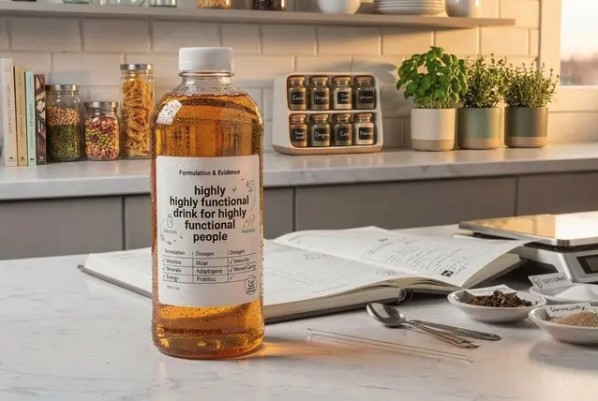
What Makes a Functional Drink Actually Functional?
Walk down any beverage aisle today and you'll find drinks promising energy, sharper focus, better digestion, faster recovery, and stronger immunity. The labels are confident. The claims are bold. But not every "better-for-you" drink actually delivers meaningful function — and that gap between marketing and reality is worth understanding.
So what separates a drink that works from one that just looks the part? The answer comes down to ingredient choice, formulation quality, solubility, stability, and bioavailability. This article breaks all of that down — covering gut health drinks, wellness shots, hydration beverages, cognitive support drinks, and more — so you can evaluate what's actually going on inside the bottle.
What Are Functional Drinks?
Functional drinks are beverages formulated with ingredients intended to support specific aspects of health, performance, hydration, digestion, cognition, beauty, energy, or recovery. The key word is "intended" — the function has to be real, not just implied by a green label or a wellness-adjacent name.
The function itself can come from many sources: probiotics, prebiotics, electrolytes, vitamins, minerals, botanicals, adaptogens, amino acids, proteins, omega-3s, or other active ingredients. What matters is that the ingredient is present at a meaningful dose, in a form the body can actually use, and that it survives the journey from manufacturing to consumption.
Why Functional Drinks Have Become So Popular
A few forces are driving this category forward at once. Convenience is a big one. Beverages fit naturally into daily routines — at your desk, during a workout, after a meal, or on the commute. You don't need to remember to take a pill. You're already drinking something.
There's also a broader shift toward preventive health. Consumers are increasingly focused on proactive wellness rather than reactive healthcare, and functional beverages fit neatly into that mindset. Add to that the documented rise of pill fatigue — the growing reluctance to swallow multiple capsules daily — and it's clear why drinkable formats are gaining ground. The Vitamin Shoppe's 2025 Health and Wellness Trend Report found that RTD protein beverages saw year-to-date sales increases of 20% in 2025, and around one in four US consumers now prefer functional foods or drinks as a delivery format for vitamins and supplements.
The numbers reflect this. Future Market Insights estimates the functional beverage industry at USD $192.8 billion in 2026, forecast to reach USD $326.5 billion by 2036. That's not a niche trend — it's a structural shift in how people consume wellness.
Common Types of Functional Beverages
The category is broad. Here's a breakdown of the main formats and what they're designed to do.
Gut Health Drinks
These products are designed to support digestion, microbiome balance, regularity, or digestive comfort. Ingredients typically include probiotics, prebiotics, fermented components, dietary fibers, and botanicals. Prebiotic claims in new US beverage launches have increased by over 400% since 2021, which tells you how fast this segment is moving.
Wellness Shots
Small-format, concentrated products built around ingredient intensity. Ginger, turmeric, elderberry, vitamins, and adaptogens are common. They're typically positioned for quick, targeted use — immune support before travel, digestion support after a heavy meal, or an energy boost without a full drink.
Hydration and Electrolyte Beverages
These have evolved well beyond sports drinks. Today's hydration products often include sodium, potassium, magnesium, B vitamins, and sometimes amino acids or botanicals. Electrolyte interest has more than doubled since 2021, with the category expanding from sports-only products into everyday lifestyle beverages.
Energy, Focus, and Nootropic Beverages
These go beyond caffeine. The better-formulated products in this space combine caffeine with L-theanine, B vitamins, adaptogens like ashwagandha, and nootropic ingredients such as Lion's Mane mushroom or citicoline. The goal is mental clarity without the crash — and the nootropic beverage market reached $3.6 billion in 2025, growing at 11.8% annually.
Protein, Recovery, and Active Nutrition Drinks
Protein beverages, meal replacements, and recovery drinks are a significant part of the functional category. These products rely on proteins, amino acids, collagen, electrolytes, and vitamins. Texture, mouthfeel, clarity, and sedimentation are major formulation considerations here — a gritty or separated protein drink rarely gets a repeat purchase.
Here's a quick reference across the main categories:
Drink Type | Common Ingredients | Intended Benefit |
|---|---|---|
Gut Health Drinks | Probiotics, prebiotics, fiber, fermented extracts | Digestion, microbiome balance |
Wellness Shots | Ginger, turmeric, vitamins, adaptogens | Immune support, targeted wellness |
Hydration Beverages | Electrolytes, sodium, magnesium, B vitamins | Hydration, performance, recovery |
Nootropic Beverages | Caffeine, L-theanine, Lion's Mane, adaptogens | Focus, mental clarity, energy |
Protein/Recovery Drinks | Protein isolates, amino acids, collagen, electrolytes | Muscle support, satiety, recovery |
Adaptogenic Beverages | Ashwagandha, rhodiola, reishi, tulsi | Stress support, balance |
Beauty-From-Within Drinks | Collagen, omega-3s, vitamins C and E, biotin | Skin, hair, nail support |
What Ingredients Are Commonly Used in Functional Beverages?
Ingredient families vary widely, and each comes with its own technical requirements around pH tolerance, heat stability, solubility, taste impact, and compatibility with other ingredients.
Vitamins, Minerals, and Electrolytes
These are the backbone of many functional beverage formats. Water-soluble vitamins like B and C integrate relatively easily. Fat-soluble vitamins — A, D, E, K — are a different story. They don't dissolve in water-based systems without help, which creates real formulation challenges. Minerals like magnesium and zinc can cause precipitation or off-tastes if not properly handled.
Botanicals, Spices, and Plant Extracts
Turmeric, ginger, green tea, elderberry, ginseng, and ashwagandha are all popular. But plant-based ingredients often bring bitterness, colour instability, sediment, and solubility problems. Curcumin — the active compound in turmeric — is notoriously hard to solubilize in water-based systems, which limits how much actually reaches the consumer in a usable form.
Probiotics, Prebiotics, and Fibers
Probiotics are live microorganisms. Prebiotics are substrates that feed beneficial bacteria. Fibers support regularity and satiety. These are distinct categories with different formulation needs. Live cultures are particularly challenging — they need to survive acidity, heat, and shelf life without losing viability.
Amino Acids, Proteins, and Collagen
These are common in performance, recovery, and beauty-from-within beverages. Hydrolysed collagen dissolves well but can affect mouthfeel. Plant proteins often struggle with solubility, taste, and texture. Protein hydrolysates can introduce bitterness. Compatibility with acids or carbonation adds another layer of complexity.
Why Formulation Matters in Functional Beverages
This is where most functional beverages either succeed or quietly fail. An active ingredient only matters if it remains stable, evenly distributed, palatable, and bioavailable in the finished product. Ingredient selection is just the starting point.
Formulation is where functional claims meet real-world product performance. A poorly formulated beverage can contain the right ingredients at the right doses and still deliver almost nothing — because those ingredients separated, degraded, or became biologically inaccessible before anyone drank them.
Solubility: Can the Ingredient Actually Disperse?
Water-based beverages are the default format, but many high-value functional ingredients don't naturally dissolve in water. Fat-soluble vitamins, omega-3s, curcumin, and many botanical actives are all hydrophobic — they repel water rather than mixing with it. The result is separation, cloudiness, oil rings, inconsistent dosing, and a poor consumer experience.
Solving solubility isn't just about aesthetics. If an ingredient isn't evenly dispersed, consumers aren't getting a consistent dose. And if it separates visibly, the product fails at the shelf before it even gets to the gut.
Stability: Will the Ingredient Survive the Product's Shelf Life?
A beverage may look fine immediately after mixing and fail months later due to oxidation, pH drift, light exposure, temperature stress, or interactions between ingredients. Heat processing — pasteurisation, UHT, hot-fill — can degrade sensitive actives. Carbonation creates pressure and acidity that some ingredients can't handle. Minerals, flavours, colours, and preservatives can all interact with functional actives in ways that reduce potency or create off-notes.
Stability is not a lab checkpoint. It's a continuous requirement from manufacturing through to the consumer's last sip.
Bioavailability: Can the Body Use the Ingredient?
A high number on the label doesn't mean high absorption. Bioavailability — how much of an ingredient is actually absorbed and available for the body to use — depends on particle size, delivery system, ingredient form, solubility, and digestion. Some ingredients are naturally well-absorbed. Others require specific delivery approaches to reach meaningful absorption levels.
Research published in the Journal of Functional Foods found that the bioavailability of curcumin can be enhanced by up to 2000% using lipid-based microencapsulation — which illustrates just how much delivery system choice can matter.
Taste, Texture, and Appearance
A product can be scientifically well-intentioned and still fail commercially if it's unpleasant to drink. Bitterness from botanicals, chalkiness from minerals, oiliness from poorly emulsified lipids, astringency from polyphenols, and sediment at the bottom of the bottle all undermine consumer acceptance. Taste is not a secondary concern — it's a core formulation requirement.
The Science of Bioavailability in Beverage Innovation
Bioavailability is one of the most important and least discussed factors in functional beverage performance. Some actives are naturally water-compatible and absorb well. Others are fat-soluble or structurally difficult to disperse, which limits how much the body can actually take up.
Why Fat-Soluble Ingredients Are Difficult in Water-Based Drinks
Fat-soluble vitamins contain a large number of unsaturated bonds and active groups, making them prone to oxidation, decomposition, or isomerization under heat, light, oxygen, and alkaline conditions. Their low water solubility and low bioavailability constrain their use in functional beverages. The same applies to omega-3 fatty acids, curcumin, CoQ10, and many botanical actives.
Without an appropriate delivery system, these ingredients may separate from the liquid, degrade during processing, or pass through the digestive system largely unused. Advanced physical processing and clean-label stabilisation approaches can convert these ingredients into water-compatible formats — but the technology has to be right.
Why Delivery Systems Are Becoming More Important
The industry is moving from simple ingredient addition to advanced ingredient delivery. Emulsification, encapsulation, and particle size reduction can all improve dispersion, stability, taste, and absorption potential. The shift is also toward cleaner approaches — natural stabilisers rather than synthetic emulsifiers, physical processing rather than chemical modification.
At Infusd, our technology converts fat-soluble and insoluble ingredients into high-potency, water-soluble formats using a proprietary physical process and natural stabilisers — no harsh chemicals, no synthetic emulsifiers. The result is ingredients that dissolve seamlessly in water, remain stable after pasteurisation or carbonation, and maintain potency for 24+ months. It's a formulation approach designed specifically for the challenges that functional beverage brands face when working with difficult actives.
Why Gut Health Drinks Are Growing So Quickly
Gut health drinks are one of the fastest-moving segments in the functional beverage space. The gut health beverages market was valued at USD $24.2 billion in 2025 and is projected to reach USD $67.8 billion by 2035. That growth is driven by a genuine shift in consumer understanding of the microbiome and its role in overall health.
55% of global consumers are actively seeking products that support gut wellness. And the science is catching up with the interest — research on the gut-brain axis, immune function, and the microbiome has made digestive health a credible and compelling category for beverage innovation.
Probiotics vs. Prebiotics in Digestive Wellness Beverages
These two terms are often used interchangeably, but they're different. Probiotics are live microorganisms — when present in adequate amounts, they may confer a health benefit. Prebiotics are substrates that selectively feed beneficial bacteria already in the gut. Both have a role in digestive wellness beverages, but they come with different formulation requirements.
Live cultures are sensitive to acidity, heat, and time. Keeping them viable through processing, shelf life, and consumption is a genuine technical challenge. Prebiotics are generally more stable but need to be present at doses that actually support microbiome activity — not just trace amounts added for label appeal.
Hydration Meets Digestive Wellness
Many gut health beverages now combine digestive support with hydration benefits — electrolytes, light mineral content, or hydration-supporting botanicals alongside probiotics or prebiotic fibers. Consumers increasingly look for multi-benefit products that fit into a single daily habit rather than requiring separate supplements for each goal.
What Makes a Wellness Shot Different From a Functional Beverage?
Wellness shots are a subcategory of functional drinks, but they operate differently. The format is small — typically 60ml to 100ml — and the ingredient concentration is high. They're designed for quick, targeted use rather than sipping over time.
Concentration and Serving Size
Because the volume is small, the ingredient load per millilitre is much higher than in a standard beverage. That creates a more intense sensory experience — stronger flavours, more pronounced acidity, and a more immediate perceived effect. Ginger shots, for example, deliver a concentrated dose of ginger root in a single swallow rather than spreading it across a 330ml drink.
Formulation Challenges in Small-Format Products
The concentrated format creates its own technical constraints. Taste intensity is harder to manage. Acidity is often high, which can affect ingredient stability and probiotic viability. Sedimentation is more visible in a small volume. Preservation without artificial additives is more challenging when ingredient loads are dense. These are real formulation problems that require specific solutions — not just scaled-down versions of larger beverage approaches.
Challenges in Functional Beverage Development
For R&D teams and product developers, the list of formulation obstacles is long. Solving them early reduces reformulation cycles and improves the quality of the finished product.
Flavour Masking and Sensory Balance
Bitter botanicals, mineral notes, protein aftertaste, and astringency from polyphenols are all common problems. Maintaining a clean-label flavour system while masking these off-notes — without reaching for artificial flavour enhancers — is one of the hardest balancing acts in functional beverage development. Botanical extracts can become increasingly bitter over time. Mushroom systems frequently introduce earthy notes that intensify during storage.
Separation, Sedimentation, and Visual Defects
Particles settling at the bottom, oil separation, floating rings, haze, and inconsistent active distribution all undermine consumer confidence. A product that looks unstable feels unsafe — regardless of what's actually happening chemically. Visual stability is a formulation requirement, not just an aesthetic preference.
Sugar Reduction and Clean-Label Preservation
Reducing sugar while maintaining flavour, mouthfeel, and stability is an ongoing challenge. Sugar plays a functional role in many beverage systems beyond sweetness — it affects texture, preservation, and ingredient compatibility. Replacing it cleanly, without introducing off-notes or destabilising the formulation, requires careful ingredient selection and process design.
Processing Conditions and Shelf Life
Ingredients need to remain functional after processing — not only in bench samples. Pasteurisation, UHT treatment, carbonation, hot-fill, and cold-fill all create different stresses on active ingredients. pH, storage temperature, and packaging all affect how long a product stays potent. A functional ingredient that degrades during manufacturing is not a functional ingredient in the finished product.
The Future of Functional Beverage Innovation
The category is moving from trend-led products into more sophisticated, science-backed formats. Consumers are becoming more informed, and brands that compete on claims alone will face increasing scrutiny.
Cleaner Labels and More Transparent Formulation
Demand for recognisable ingredients and fewer synthetic additives is reshaping product development. Natural stabilisers, reduced artificial additives, and transparent ingredient sourcing are becoming baseline expectations — particularly in premium and natural channels. Clean-label products are predicted to make up more than 70% of company portfolios in the European food and beverage sector by 2025 and 2026.
More Multi-Benefit Beverage Concepts
Single-benefit products are giving way to layered concepts: hydration plus cognition, gut health plus immunity, beauty with collagen plus omega-3s, recovery with electrolytes plus amino acids. Multi-benefit combinations are emerging as a key innovation direction — but they increase formulation complexity significantly. More ingredients means more potential interactions, more stability risks, and more sensory challenges to manage.
Advanced Delivery Systems as a Competitive Advantage
Brands will increasingly need ingredient systems that support solubility, stability, neutral taste, clear appearance, and high active payloads — all at once. The days of simply adding an ingredient and listing it on the label are numbered. Delivery technology is becoming a real differentiator.
At Infusd, our technology is designed specifically to help brands make hard-to-solubilize ingredients more usable in clean-label beverage and powder applications — converting fat-soluble and insoluble actives into stable, water-soluble formats that survive processing and deliver at efficacious doses.
Frequently Asked Questions
What are functional beverages?
Beverages formulated with ingredients intended to provide benefits beyond refreshment — such as hydration, digestion, focus, energy, recovery, or wellness support. The function should come from active ingredients present at meaningful doses in a stable, usable form.
What ingredients are used in functional beverages?
Common ingredient categories include probiotics, prebiotics, vitamins, minerals, electrolytes, botanicals, adaptogens, amino acids, proteins, collagen, omega-3s, and antioxidants. Each has different technical requirements around solubility, stability, and compatibility.
Are wellness shots part of this category?
Yes. Wellness shots are a small-format type of functional drink — concentrated, high-intensity products designed for quick, targeted use. They're formulated with active ingredients intended to support a specific benefit, which qualifies them as functional beverages.
What are gut health beverages?
Beverages designed to support digestion, microbiome balance, regularity, or digestive comfort. Common ingredients include probiotics, prebiotics, dietary fibers, fermented components, and digestive botanicals.
How do functional drinks work?
The intended effect depends on the ingredient type, dose, stability, and bioavailability. Formulation determines whether the ingredient remains usable in the finished drink — an active that degrades during processing or separates in the bottle won't deliver its intended benefit.
What is bioavailability in beverages?
Bioavailability refers to how much of an ingredient is absorbed and available for the body to use. Solubility, ingredient form, delivery system, and digestion all influence it. A high dose on the label doesn't automatically mean high absorption.
Why does formulation matter?
Formulation affects taste, texture, stability, shelf life, solubility, active distribution, and absorption potential. A well-chosen ingredient in a poorly formulated product can deliver almost nothing. Formulation is where functional claims become real-world product performance.
What makes a beverage "functional"?
A beverage is genuinely functional when it contains purposeful active ingredients in a stable, usable, consumer-friendly format designed to support a specific benefit — at a dose that actually matters, in a form the body can use.
Are functional drinks scientifically backed?
It depends on the ingredient, dosage, formulation, and claim. Some ingredients have strong evidence bases; others are early-stage or category-adjacent. Careful evaluation of ingredient evidence, finished product stability, and regulatory compliance is essential before making health claims.
What are the fastest-growing functional beverage categories?
Digestive wellness, hydration and electrolytes, energy and focus, adaptogens, protein and recovery, beauty-from-within, and wellness shots are all growing quickly. Prebiotic and probiotic sodas are among the fastest-moving segments, with 40–50% annual growth in the US.
Where Beverage Function Meets Formulation Science
The functional drinks category is past the point of being a trend. It's becoming a science-led segment where ingredient selection matters, but formulation quality matters just as much — and in many cases, more.
Solubility, stability, taste, shelf life, and bioavailability determine whether a beverage can actually deliver on its promise. A product with the right ingredients in the wrong format is not a functional product. It's a label.
If your team is working with fat-soluble or hard-to-solubilize actives — omega-3s, fat-soluble vitamins, botanical extracts, adaptogens, or nootropics — and you need a clean-label, water-compatible solution that holds up through processing and shelf life, explore how our technology at Infusd approaches these formulation challenges. We help brands convert difficult ingredients into stable, high-payload, water-soluble formats designed for real-world beverage and powder applications.