Creatine Drinks: Compare RTD, Powder, Sticks, Shots
Creatine is no longer just a tub of white powder sitting next to a shaker bottle. The market has shifted. Grand View Research puts the global creatine supplements market at USD 1.37 billion in 2025, projected to hit USD 8.68 billion by 2033. Demand is coming from new audiences — women, older adults, people focused on cognitive health — and those consumers want formats that fit their lives, not their gym bags.
That creates real product development decisions. Creatine drinks now span RTDs, powdered mixes, stick packs, shots, effervescents, and multi-active blends. But each format brings different formulation requirements, stability risks, sensory challenges, and manufacturing constraints. Picking the wrong one can mean degraded actives, poor consumer experience, or a product that never makes it past shelf-life testing.
This post breaks down the main format options, what drives the choice between them, and what product teams need to think through before committing to a direction.
The Main Format Options for Creatine Drinks
As we covered in our creatine formats overview, consumers now use powders, stick packs, gummies, gels, chews, capsules, shots, ready-to-drink products, and hybrid creatine/pre-workout or creatine/protein products. Each format changes the experience. For brands, each also changes the technical brief.
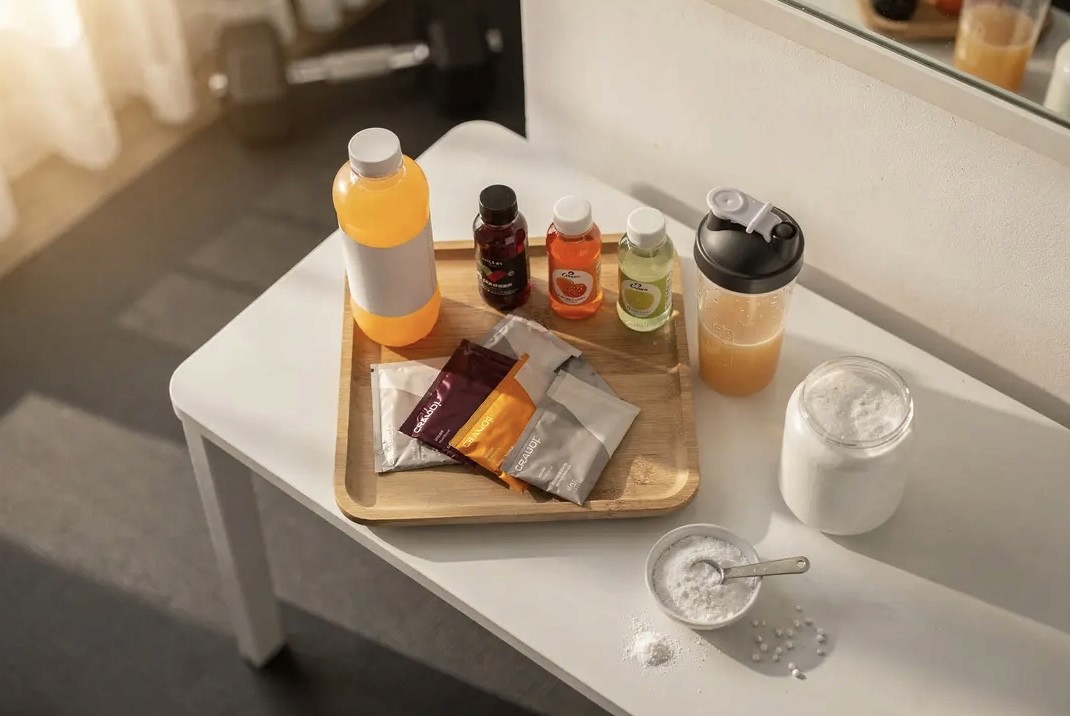
The main drinkable categories are: RTD bottles and cans, powdered drink mixes, single-serve stick packs, effervescent tablets and powders, liquid shots and concentrates, and hybrid functional blends. The right choice depends on dose, shelf-life expectations, taste profile, processing conditions, and the consumer occasion you're designing for.
Ready-to-Drink Bottles and Cans
RTDs are the most convenient format for the consumer. No mixing, no measuring, no mess. They fit gym bags, retail shelves, and grab-and-go routines. They're also a natural vehicle for creatine integration into sports drinks, energy drinks, hydration beverages, and functional waters — a market already worth over USD 50 billion in the US alone.
But RTDs are the most technically demanding creatine format. As we explain in our article on creatine in hot drinks and liquid systems, creatine is already in solution from the moment of production, which means pH, temperature, and storage conditions are all working on the ingredient before the consumer ever opens the bottle.
The core problem is degradation. After three months at neutral pH, approximately 95% of standard creatine monohydrate has already converted to creatinine, which has no ergogenic value. At acidic pH — common in energy drinks and flavoured waters — degradation can begin within days. Add heat processing, warehouse storage, and distribution, and the challenge compounds fast.
Sedimentation, flavour masking, and mouthfeel are additional concerns. Creatine adds bitterness and chalkiness that can be hard to manage without overpowering the flavour system.
Powdered Drink Mixes
Powder remains the dominant format, holding around 80% of the creatine supplements market. The reasons are practical: better active stability, higher dose flexibility, lighter logistics, and lower cost per serving.
In solid state, creatine monohydrate is stable. Degradation only occurs in aqueous solution, so powders consumed promptly after mixing avoid most of the stability issues that plague RTDs. Tubs, pouches, and scoop-based formats also allow brands to build more complex flavour systems and combine creatine with other actives without the constraints of a liquid matrix.
The drawbacks are on the consumer side. Standard creatine monohydrate has limited solubility — about 14g dissolves per litre of water at 20°C — which can leave residue at the bottom of a glass. Gritty mouthfeel is a well-documented pain point. Micronized creatine helps here: as we explain in our micronized creatine explainer, finer particles stay suspended longer, reduce visible sediment, and improve texture. For premium powders and blends, 200 mesh micronized creatine is often considered essential.
Single-Serve Stick Packs and Sachets
Stick packs sit between powder tubs and RTDs. They offer pre-measured dosing and portability without the weight and cost of a bottled beverage. They're well suited to travel, workplace use, sampling campaigns, and subscription models.
From a formulation standpoint, stick packs share most of the stability advantages of powder. But particle size and flow matter more here. As we note in our micronized creatine article, granular creatine flows better through automated filling equipment and reduces clumping during production. Finer grades can cause manufacturing headaches in high-speed stick pack lines.
Moisture control is also critical. Stick packs need tight barrier packaging to prevent premature clumping or degradation, especially in humid environments. Flavour intensity and dispersion speed matter too — consumers adding a stick pack to a bottle of water at the gym expect it to dissolve quickly and taste clean.
Effervescent Tablets and Powders
Effervescent formats create a more experiential delivery system. The fizz improves the consumption ritual, supports hydration positioning, and can make creatine feel more like a functional drink than a supplement. They're also a way to improve solubility — the dissolution process helps disperse the active more evenly.
The formulation trade-off is significant. The acidic ingredients that create the effervescence can accelerate creatine breakdown before consumption. Research has shown up to 90% creatine degradation within 45 days for room-temperature effervescent solutions, with refrigerated samples not far behind. Packaging moisture protection is also critical — any moisture exposure triggers the acid-base reaction prematurely.
Dose is another constraint. Getting 3–5g of creatine into a tablet that's not unwieldy in size, while also accommodating the effervescent system, flavour, and any co-actives, requires careful formulation work.
Liquid Shots and Concentrates
Shots and concentrates appeal to consumers who want rapid consumption, premium positioning, and minimal preparation. A 60–100ml shot format can deliver a full creatine dose in a few seconds, which suits performance-led or convenience-led positioning.
But small volume means high concentration, and high concentration amplifies every formulation challenge. Solubility limits become harder to work around. Taste intensity increases. Stability risks are the same as RTDs, often in a more concentrated form. As we note in our format overview, shots need careful management of concentration, flavour, and mouthfeel in a small volume.
Creatine HCl is often highlighted as better suited to shot formats due to its higher solubility compared to monohydrate, though the evidence base for monohydrate remains stronger overall.
Hybrid Functional Beverage Blends
Creatine increasingly appears as one ingredient in a broader functional stack — paired with electrolytes, caffeine, amino acids, adaptogens, nootropics, vitamins, or recovery-focused botanicals. Products like FITAID RX demonstrated that a commercially viable RTD creatine beverage with multiple co-actives is achievable, though it required significant formulation investment.
Stacked formulations can create stronger consumer propositions and justify higher price points. But they also multiply formulation complexity. As we explain in our solubility explainer, multi-functional beverages that include different ingredients interacting with one another can face separation, ringing, flocculation, or sedimentation. Each co-active brings its own solubility, pH sensitivity, and stability profile.
How Consumer Use Occasion Shapes the Right Format
Format choice should start with how, when, and why the consumer will use the product. The same 5g dose of creatine feels completely different in a ready-to-drink can, a stick pack, a shot, or a scoop-based powder. The format signals the occasion.
Pre-Workout and Performance Use
Performance-focused consumers want fast preparation, clear dosing, and compatibility with caffeine or electrolytes. Bold flavours are acceptable — often expected. Powders, stick packs, shots, and RTDs can all work here depending on brand positioning and price point. The key is that the format delivers a credible dose and a clean sensory experience, without requiring too much preparation time before training.
Daily Wellness and Habit Formation
Creatine's expanding consumer base — women, older adults, people focused on cognitive health — often doesn't identify with traditional sports nutrition. For these consumers, format matters as much as function. RTDs and stick packs can make creatine feel accessible and habitual rather than clinical. Milder flavours, smaller pack sizes, and formats that fit morning routines or desk-side hydration habits are more relevant here than aggressive performance branding.
On-the-Go Convenience
Single-serve bottles, cans, sachets, and shots all serve portability-focused consumers. No scoop, no mess, no measuring. But convenience formats demand tighter control over stability, sensory performance, and packaging durability. A product that looks or tastes off after a few weeks on a retail shelf — or after sitting in a warm delivery van — will not build repeat purchase.
Key Formulation Considerations Across Drinkable Formats
Beyond marketing appeal, product developers need a technical lens for comparing formats. The main criteria are solubility, dispersion, stability, taste, mouthfeel, processing, packaging, and ingredient compatibility.
Creatine Form and Solubility
Creatine monohydrate is the most widely studied form and the reference standard in clinical research. It contains 87.9% creatine by weight and has a strong safety and efficacy record. Its limitations are practical: limited solubility in cold water, potential for sedimentation, and gritty mouthfeel at standard doses.
Alternative forms — creatine HCl, creatine citrate, creatine pyruvate, buffered creatine — offer improved solubility in some cases. Creatine citrate shows 1.55-fold and creatine pyruvate a 2.63-fold better solubility compared to monohydrate, though they contain less creatine by weight. The evidence base for these alternatives remains thinner than for monohydrate, and the right form depends on the format and the dose you're targeting.
Stability in Liquid Systems
This is the defining challenge for RTDs, shots, and concentrates. Creatine degrades into creatinine in aqueous environments, with the rate driven by pH and temperature. At pH 3.5, significant degradation can occur within three days at 25°C. At pH 6–9, stability is much better. Creatine monohydrate may degrade rapidly in standard acidic beverages like energy drinks, which typically sit at pH 2.5–4.
Stability testing is non-negotiable for liquid formats. Brands need to design for realistic shelf-life targets, choose appropriate pH buffering systems, and validate performance under actual storage and distribution conditions — not just lab conditions.
Taste, Mouthfeel, and Visual Appearance
Grittiness, chalkiness, and bitterness are the most common sensory complaints about creatine products. Different formats create different expectations. A clear RTD needs a different sensory strategy than a flavoured powder or a concentrated shot. Sediment in a transparent bottle is a consumer trust problem, not just a formulation inconvenience. Sweetness systems, flavour masking, and clarity versus opacity all need to be designed for the specific format.
Dose Delivery and Serving Size
Standard athletic dosing has been 3–5g per day, but researchers at SupplySide Global 2025 advocated for 8–10g per day as a more appropriate target for full-body benefits, including cognitive and healthy ageing applications. Higher doses create bigger formulation challenges in liquid formats: more creatine in solution means greater solubility demands, larger serving volumes, and more significant stability risks. High-dose positioning may suit powders or larger RTDs, while shots and stick packs need careful serving design.
Processing and Manufacturing Conditions
Not every co-packer knows how to handle creatine in a beverage context. Pasteurisation, hot fill, carbonation, blending order, and hydration time all affect active integrity. UHT at 135°C for 5–10 seconds is generally preferred over prolonged retort sterilisation. Powder formats need attention to flow, moisture control, and packaging line compatibility. Brands should confirm that their manufacturing partner has experience with creatine-based beverages and can support pilot runs before committing to full production.
Clean-Label and Functional Beverage Design Considerations
Most brands developing creatine drinks today want functional performance without artificial additives, synthetic emulsifiers, or heavy sensory masking. Around 60% of North American consumers actively avoid artificial additives. That expectation shapes the full formulation brief, not just the creatine ingredient choice.
When Creatine Is Paired With Other Functional Ingredients
Adding botanicals, adaptogens, nootropics, or fat-soluble vitamins alongside creatine multiplies the formulation complexity. Each co-active brings its own solubility profile, pH sensitivity, and stability window. Some may interact with creatine or with each other. Low-pH systems — RTD teas, juices, functional sodas — are particularly demanding, requiring every ingredient to remain soluble and stable under acidic conditions.
Natural Colours, Flavours, and Preservative Systems
Supporting ingredients matter as much as the active. Natural colours can fade or precipitate under heat, light, or acidic conditions. Botanical flavours can introduce haze, bitterness, or off-notes that interact with creatine's own sensory profile. Clean-label preservation systems can affect pH and taste in ways that need to be evaluated across the full matrix. Product teams should assess the complete formulation rather than treating creatine as an isolated variable.
Where Ingredient Delivery Technology Can Help
Ingredient delivery technology can resolve a lot of these challenges before they become launch problems. At Infusd, we transform hard-to-formulate nutrients into stable, water-soluble ingredients — available in liquid or powder formats — using a proprietary physical processing method and natural stabilisers, with no harsh chemicals or synthetic emulsifiers. That approach is relevant not just for creatine, but for the full ingredient stack: omega-3s, fat-soluble vitamins, curcumin, and other actives that create solubility or stability problems in functional beverages. Our ingredients remain stable through pasteurisation and UHT treatment, with a minimum 24-month shelf stability in real-time studies. For brands building RTDs, shots, or clean-label functional blends, that kind of stability foundation changes what's technically possible.
Choosing the Best Format for a Product Pipeline
There's no universal answer. The right format depends on brand positioning, consumer behaviour, technical feasibility, cost, shelf-life expectations, and manufacturing route.
Start With the Consumer Promise
Define what the product is actually for before choosing the format. Is it a performance supplement, a daily wellness habit, a hydration product, a cognitive support drink, or a recovery formula? The same creatine dose can feel very different depending on whether it arrives in a can, a sachet, a shot, or a powder. The format should reinforce the promise, not contradict it.
Match the Format to the Technical Risk
RTDs and liquid concentrates require more robust stability work. Powders and sachets are simpler for active stability but need good dispersion and mouthfeel. Shots amplify every liquid formulation challenge in a smaller volume. Effervescents add acid-base complexity. None of these are reasons to avoid a format — but they are reasons to pilot, test, and validate before scaling. Shelf-life testing under realistic distribution conditions is not optional for liquid formats.
Consider Retail, Ecommerce, and Manufacturing Fit
The commercially attractive format is not always the easiest technical format. RTDs are compelling on shelf but expensive to produce, ship, and store. Stick packs are ecommerce-friendly and easy to sample but need tight manufacturing tolerances. Powders have the best cost-per-serving economics but can feel less premium in some retail environments. Go-to-market realities should be part of the format decision from the start, not an afterthought.
Common Format Mistakes to Avoid
Choosing Convenience Before Stability
Liquid formats are powerful but need rigorous stability, pH, and sensory work before launch. Previous attempts at RTD creatine beverages saw 95% degradation within three months with standard creatine monohydrate. Early stability testing is far cheaper than a reformulation after launch — or a product that doesn't deliver what the label claims.
Overloading the Formula
Multi-functional formulas can become difficult to stabilise, flavour, and communicate. Adding five or six co-actives to a creatine drink creates a complex interaction matrix and a harder consumer story. Prioritise the main benefit and supporting ingredients. A focused formula is usually easier to make, easier to test, and easier to sell.
Ignoring the Drinking Experience
Functional efficacy alone doesn't drive repeat purchase. Taste, texture, aroma, clarity, aftertaste, and ease of mixing all determine whether a consumer comes back. Grittiness and chalkiness are among the top reasons consumers abandon creatine products. The product needs to be enjoyable and convenient enough to become habitual — especially for the daily wellness and cognitive health audiences that are driving category growth.
Building the Next Generation of Drinkable Creatine Products
Creatine drinks are a genuine product development opportunity, but the format decision is more consequential than it might appear. RTDs offer convenience but demand serious stability investment. Powders and stick packs are technically simpler but need sensory work to compete. Shots and concentrates suit premium positioning but amplify formulation risk. Hybrid blends can create stronger propositions but require more complex ingredient management.
The right format starts with the consumer occasion, runs through the technical requirements, and lands on a manufacturing and commercial route that's actually viable. Brands that get all three aligned tend to build better products faster.
If you're developing functional beverages, powders, shots, or clean-label creatine products and need help with solubility, stability, or delivery of challenging actives, we work with brands to transform hard-to-formulate ingredients into stable, water-soluble formats — in both liquid and powder forms. See our applications or explore our technology to understand what's possible.